
2026 NBA Draft Big Board Notes: Part II of III
Writeups on the next 10 prospects on my big board, chosen in a random order

This is the second part of my 2026 NBA Draft big board notes, the first one can be found here.
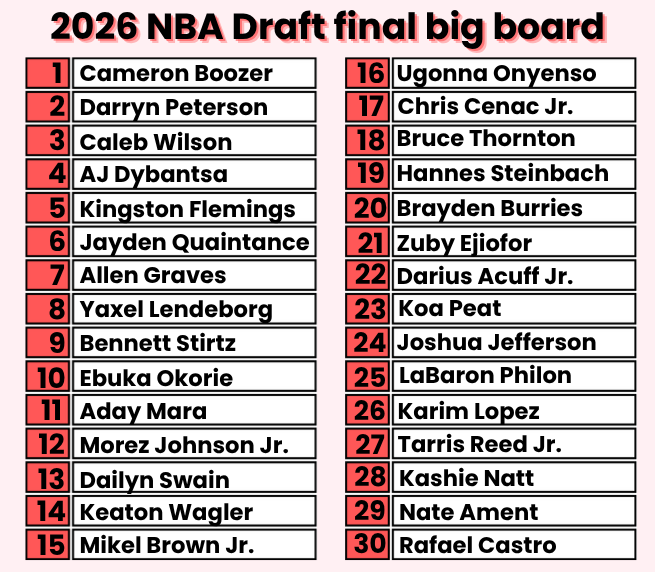
This part features Hannes Steinbach, AJ Dybantsa, Joshua Jefferson, Dailyn Swain, Morez Johnson Jr., Zuby Ejiofor, Allen Graves, Ebuka Okorie, Chris Cenac Jr. and Brayden Burries.
Hannes Steinbach
Ranking on my big board: 19th
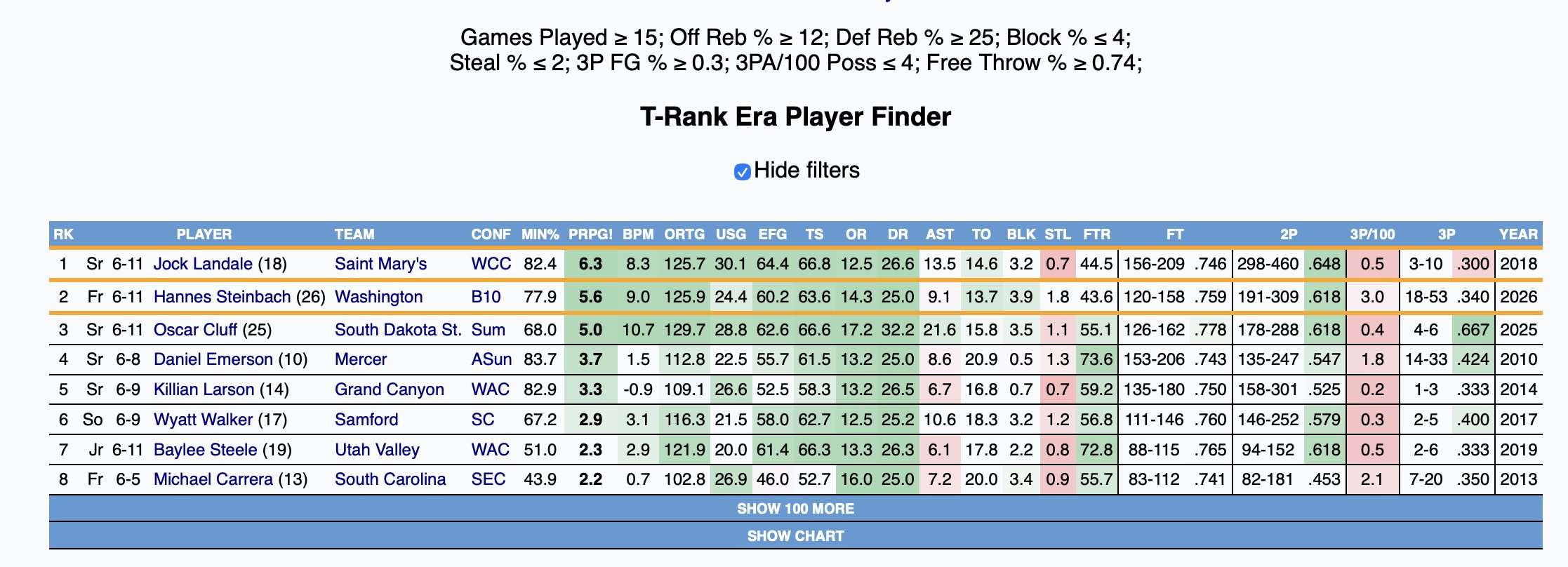
The question of positional translation is paramount for Steinbach. Despite putting up monster rebounding numbers, Steinbach basically split his minutes at the 4 and 5, starting alongside fellow big Franck Kepnang, and commanding the paint as a solo big when Kepnang sat.
On the season, Steinbach had a sub-4% block rate and his minutes at the 5 did see a slight shot blocking jump, but despite that, with Steinbach at the 5, Washington’s defense clearly suffered. The subsequent impact on shot blocking traits feels rather damning for Steinbach as a 5.
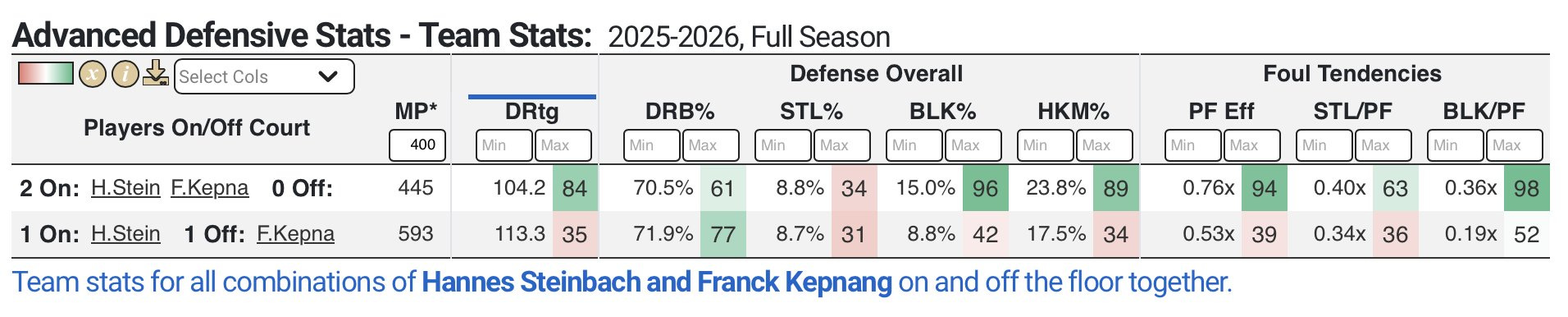
Washington’s opponents also shot and made a higher volume of shots at the rim with Steinbach as the anchoring big.
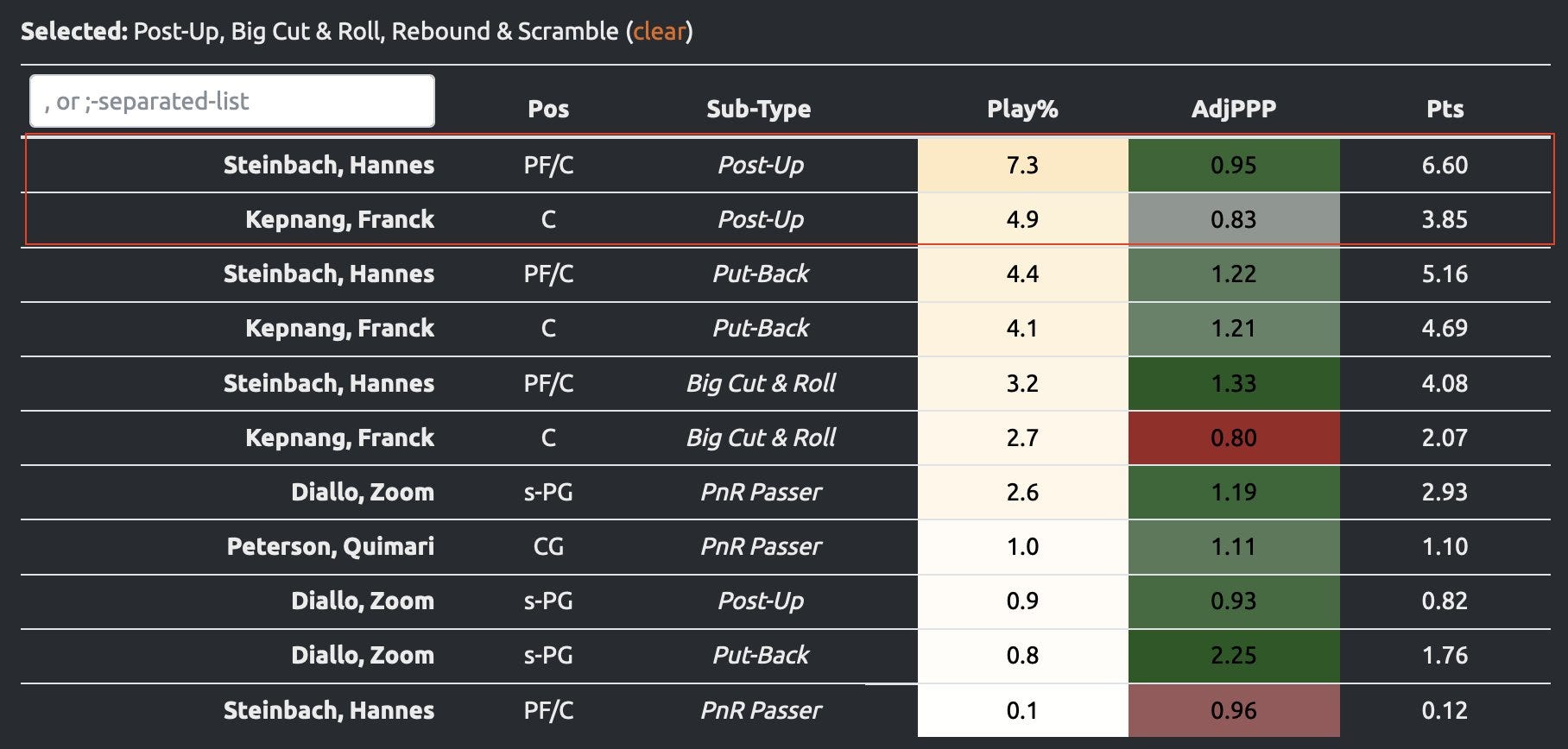
Yet, offensively Steinbach kept a largely 5-adjacent playstyle, boasting a significantly higher post-up frequency than Kepnang in double big lineups, also lapping his frontcourt partner in other big-like action frequency like scoring on rolls and putbacks.
Playing a starting center with negative shot blocking and rim deterrence abilities is one of the most reliable one-stop solutions if your goal is to funnel yourself towards a bottom 10 defensive rating in the NBA; I strongly believe that any team serious about contending at the upper echelons of the league should refrain from drafting Steinbach, if the intention is to play him as your starting center in the longer term.
Steinbach’s productive starting-level outcomes are largely tied to his functionality in double big lineups where he wouldn’t have to anchor a defense. Steinbach’s primary value as a second big is clearly rooted in his ability to rebound.
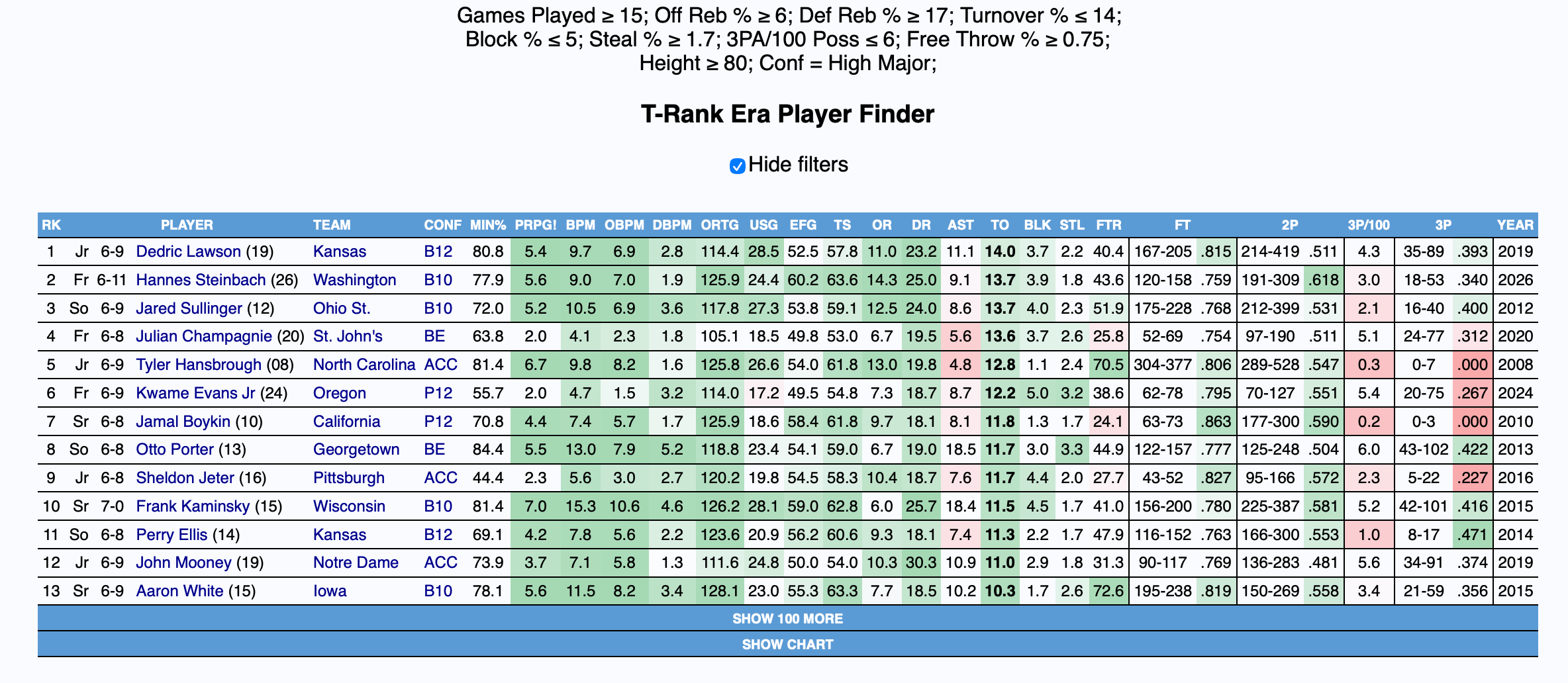
It’s more likely than not he develops a stationary shooting ability at some point, but with limited on-ball equity on the perimeter (<10% ast and big-type creation) I have my qualms about whether Steinbach is ever impactful enough as a shooter.
It is my belief Steinbach’s most likely outcomes are somewhere in the Jock Landale ballpark: a solid backup big worthy of a pick in the late 10s/early 20s.
AJ Dybantsa
Ranking on my big board: 4th
AJ Dybantsa has finished his only season at BYU ranking among all-time offensive load bearers and had a noticeable usage bump in mid-February after Richie Saunders went down with a season-ending injury.
You’re not drafting AJ Dybantsa to scale him down into a tertiary offensive role; he’s going to have the ball a lot in the NBA, so we will be evaluating AJ through the lens of a ball-dominant wing who’s going to take 20+ field goals per night regularly in the NBA.
Dybantsa’s game is largely based inside the arc and around the mid-range; more than half of AJ’s shots came in the long 2 area, giving him a Moreyball rate of just 45%.
Though Dybantsa is a functional playmaker, considering he’s going to have the ball in his hands a ton, he essentially shapes his team’s offense in his own image. The 22% ast rate on all-time usage and a muddy shot diet are a couple of aspects that make it difficult for me to buy into AJ as an elite offensive engine in the NBA.
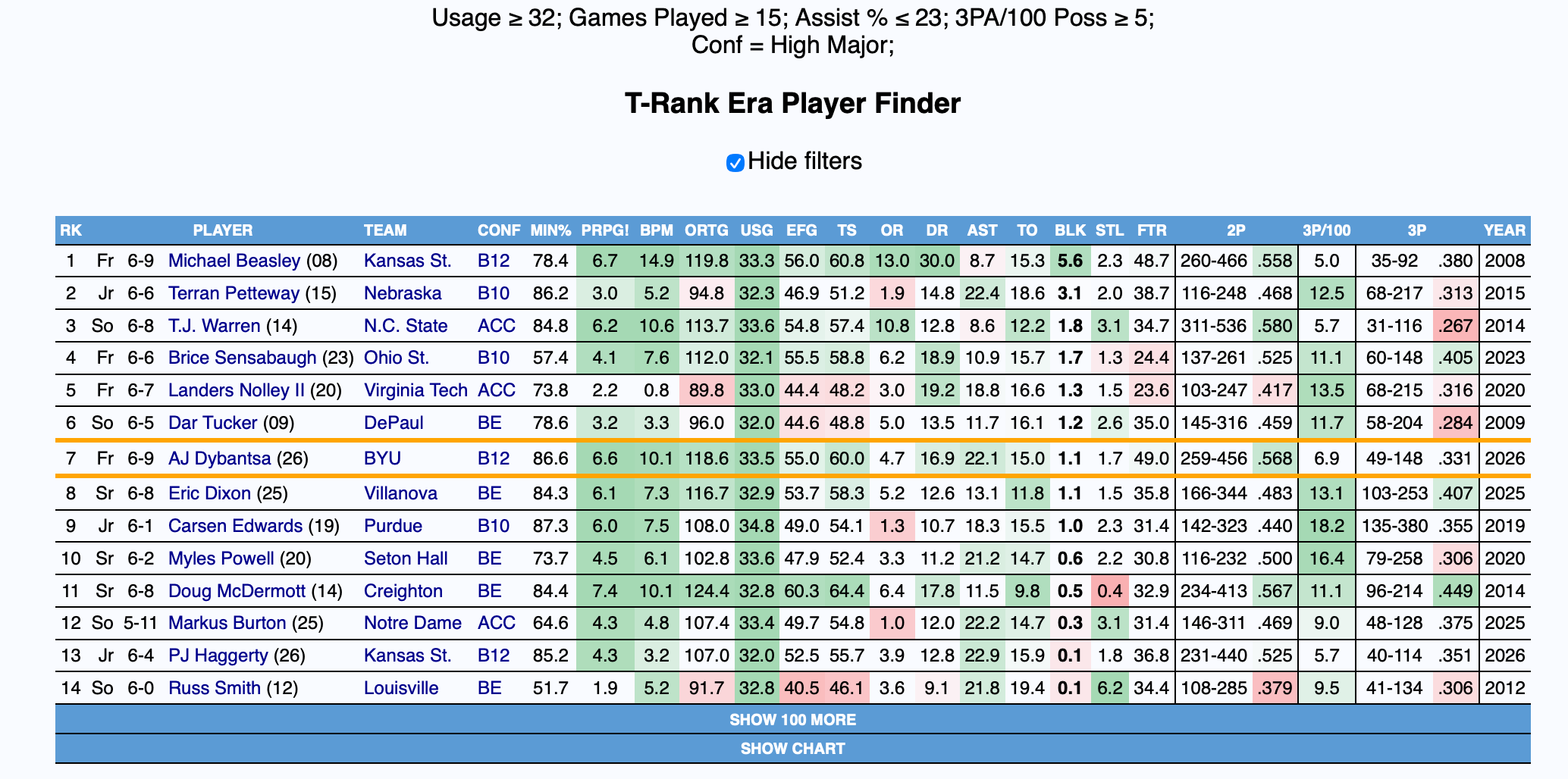
The pressure on his shotmaking translation is immense because for Dybantsa to fully justify the pre-draft hype, he’s going to have to make a sizeable +rTS% contribution for his team. And to do that when you’re mostly based in the mid-range area is really hard. I struggle shaking off the Jaylen Brown/RJ Barrett/Paolo Banchero comps, and not in a good way.
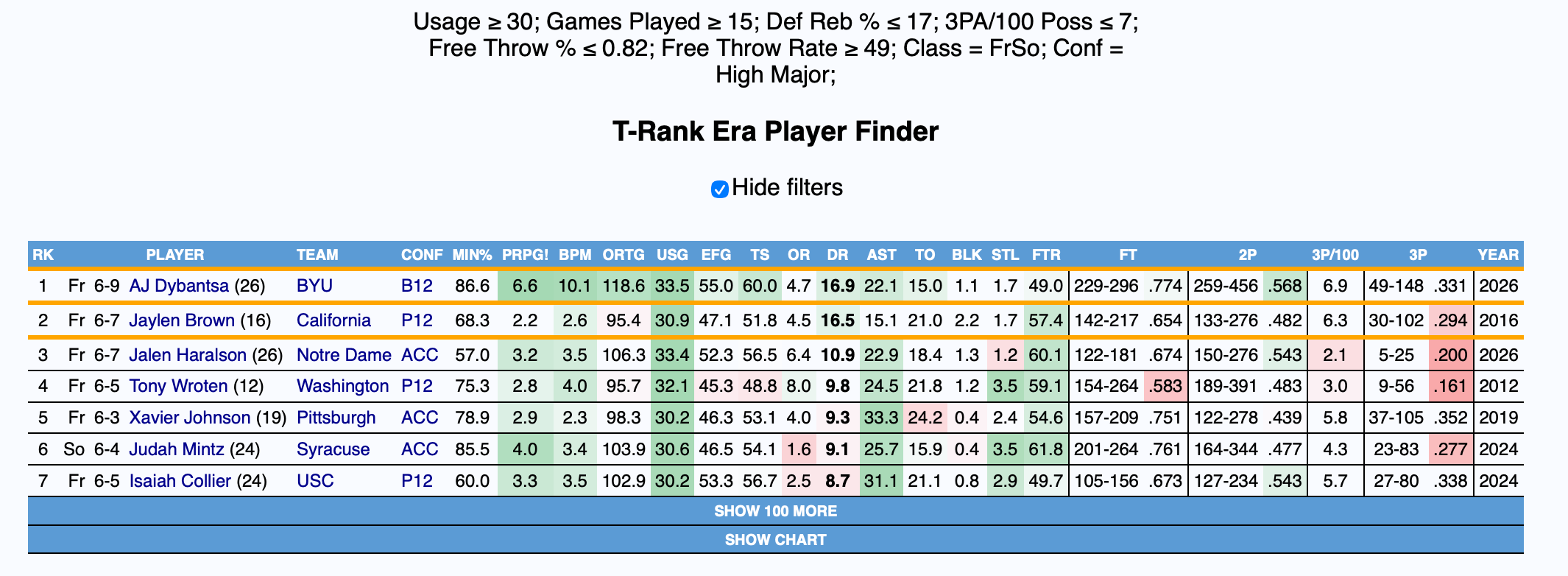
If we’re looking for positive aspects, Dybantsa’s ability to grift fouls may be the single most redeeming quality as a primary.
I dislike that level of 3 pt suppression in favour of long 2s, the ridiculously high on-ball equity, just an average passing volume and a high degree of neglect towards your athletic gifts on the other end of the floor. I won’t say you can’t build a championship winning team on that type of player - there’s definitely a feeling of elevated variance in NBA playoffs with the Knicks winning this year and Pacers going 7 games in the finals last season.
But I’m adamant building a championship winning team around Dybantsa will be more difficult purely because he needs specific lineup architectures catering to both his strengths and weaknesses.
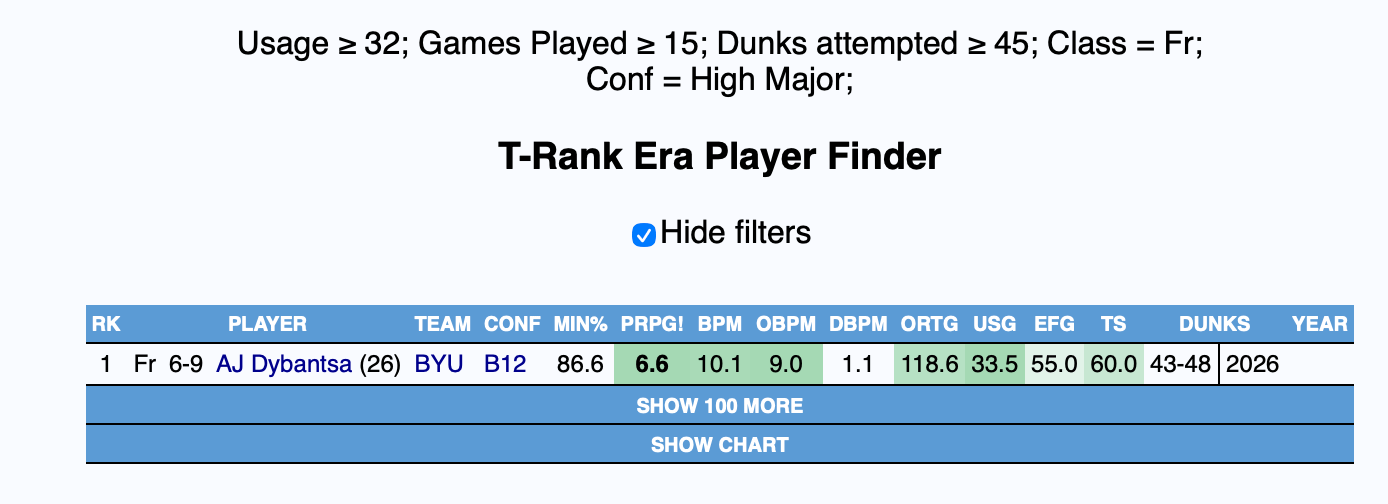
At the same time, there’s a good chance Dybantsa’s additional length and athleticism (he dunks every third of his rim shots) eventually takes him way beyond Brown, Barrett or Banchero.
A good amount of my process this year was based on chasing outliers both on the high and low ends of the board, and if there’s anything truly singular about Dybantsa, it’s this particular integration.
Joshua Jefferson
Ranking on my big board: 24th
Joshua Jefferson is quite a tough player to evaluate because he’s one of the forwards who functioned as a true offensive engine for his team, with Iowa State, wingifying their nominal guards Tamin Lipsey and Kyllian Toure to different extents.
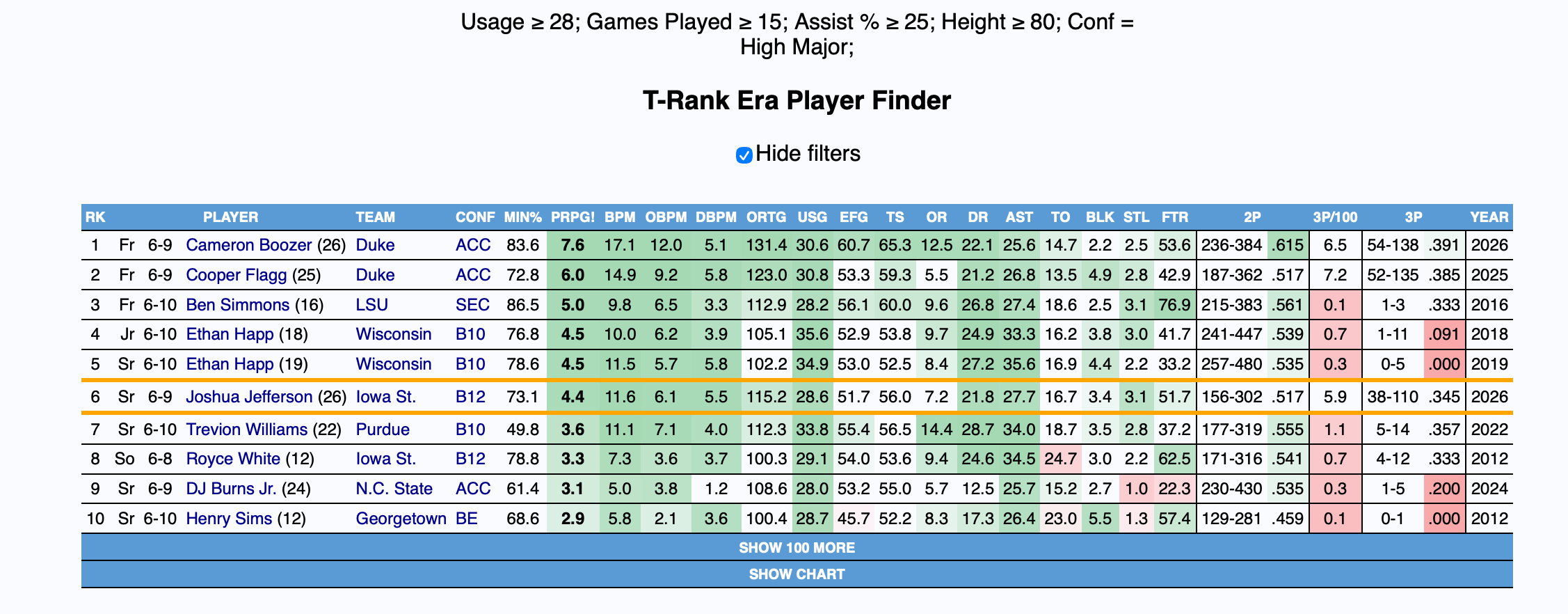
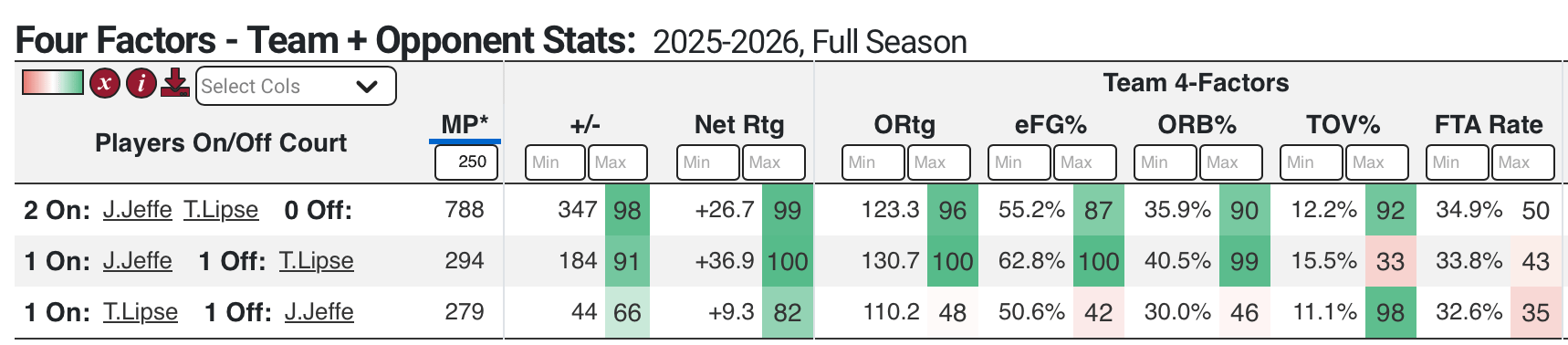
In Jefferson’s two years at Iowa State, the Cyclones had their two best offensive seasons under TJ Otzelberger. The Jefferson-Lipsey pairing was highly synergetic mainly because Lipsey is an excellent stabilizer at the PG position: though his offensive output isn’t that of a true engine, his ability to control turnovers was crucial.
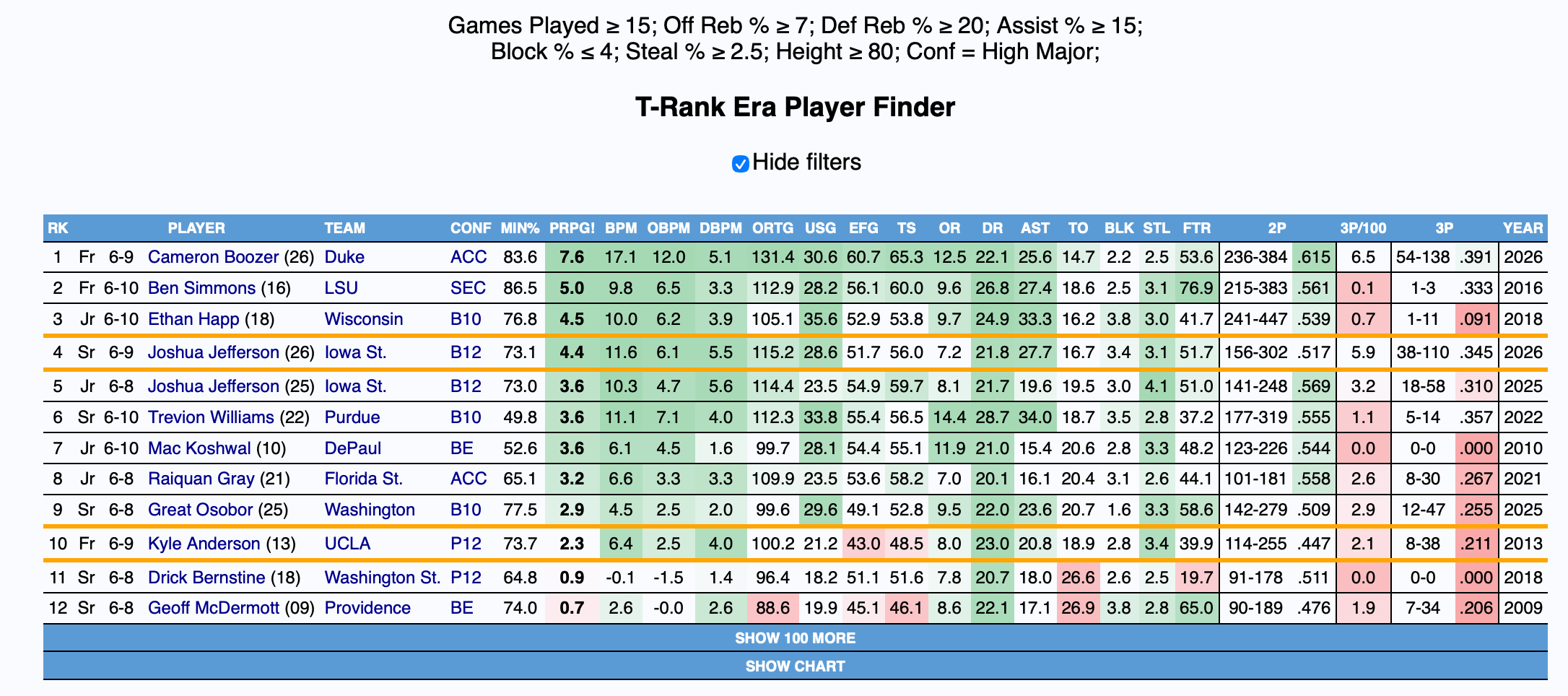
Jefferson’s positive NBA outcomes hinge on him figuring it out offensively and providing value through his feel and ancillaries.
He probably turns it over a bit too much to justify giving him as many on-ball reps in the NBA as he got in college. He throws a lot of risky passes from the top of the key, pinch and mid-post.
On the other hand, a large wing with a strong rebounding, defensive playmaking and feel integration, depending on the price, is always a worthwile bet to stick around in the NBA.
The aforementioned ancillaries and feel are so crucial mostly because of how flawed Jefferson’s scoring profile is.
Throughout a 4 year career at St. Mary’s and later Iowa State, Jefferson’s improvements scoring the basketball were modest. His usage bump this year coincided with a pretty terrible dip in 2 point scoring: in half-court, Jefferson made just 46.6% of his 2 pointers, a number adjacent to freshman guards in this year’s class. Needless to say that’s not ideal, considering Jefferson is 22 and almost 6’8” barefoot.
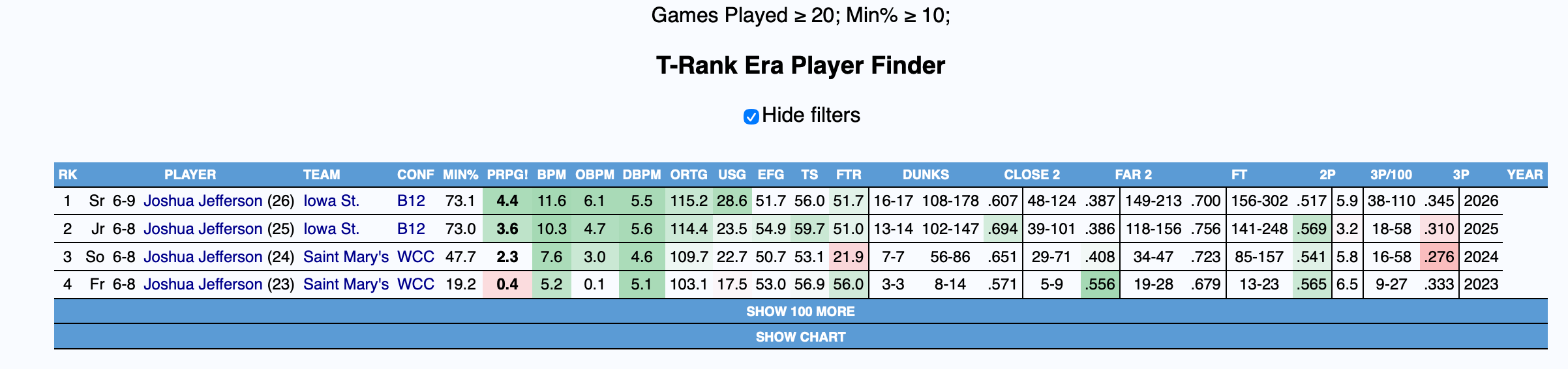
A career 72% from the line and just 5 three point attempts per 100 posessions aren’t really something that can project tremendous development as a shooter.
Because he never really developed a reliable shot from 3 and isn’t an explosive athlete by any means, Jefferson’s point-forward scoring process wasn’t exactly adherent to Moreyball principles.
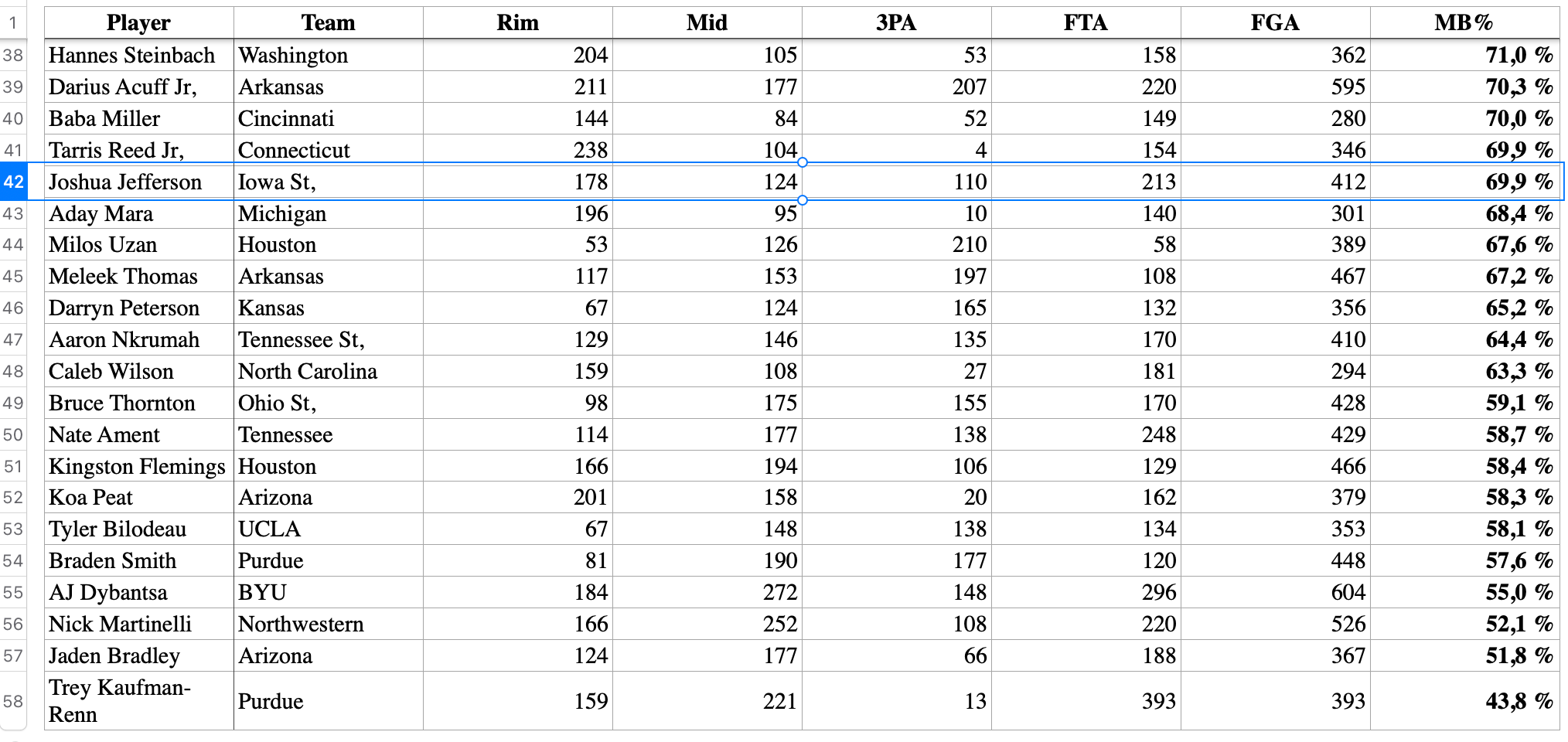
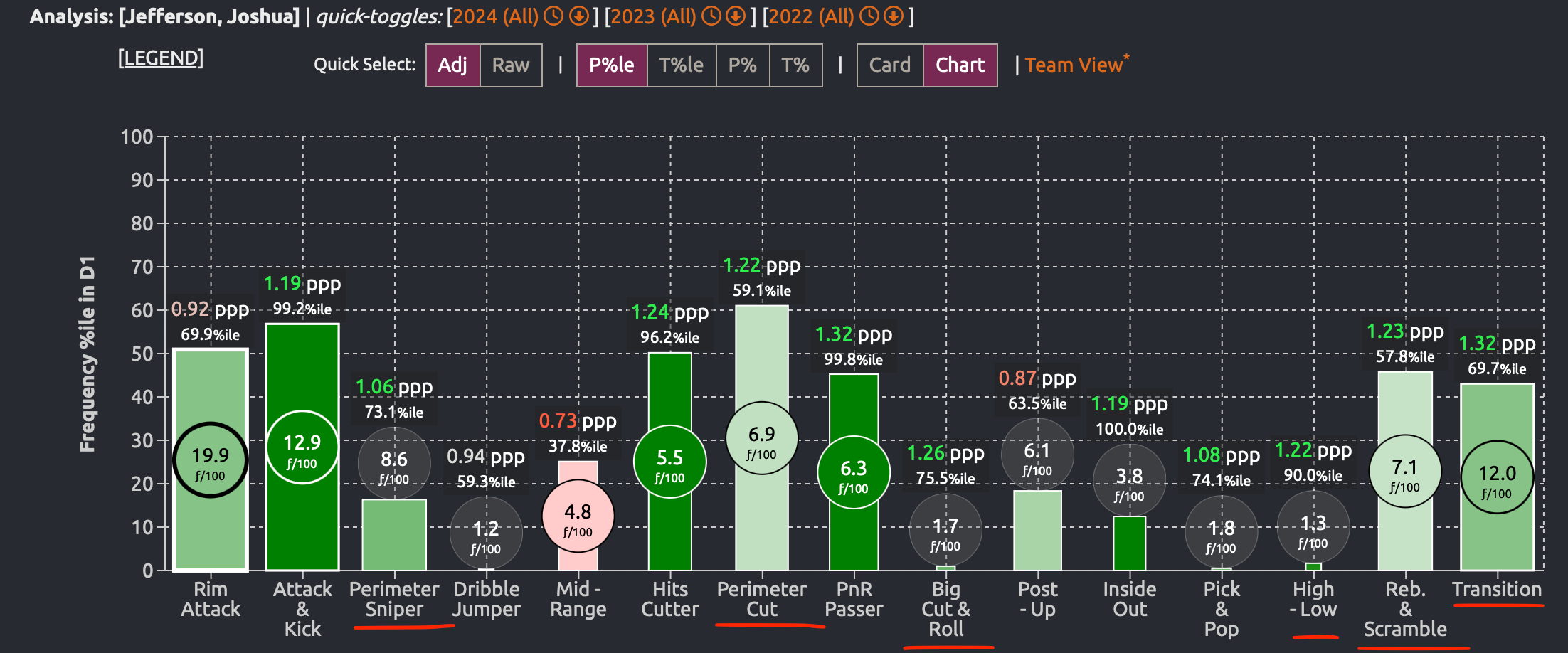
Jefferson had just 17 dunk attempts on the season, while operating near the basket quite a bit. He struggled in most non-primary actions, including scoring on putbacks.
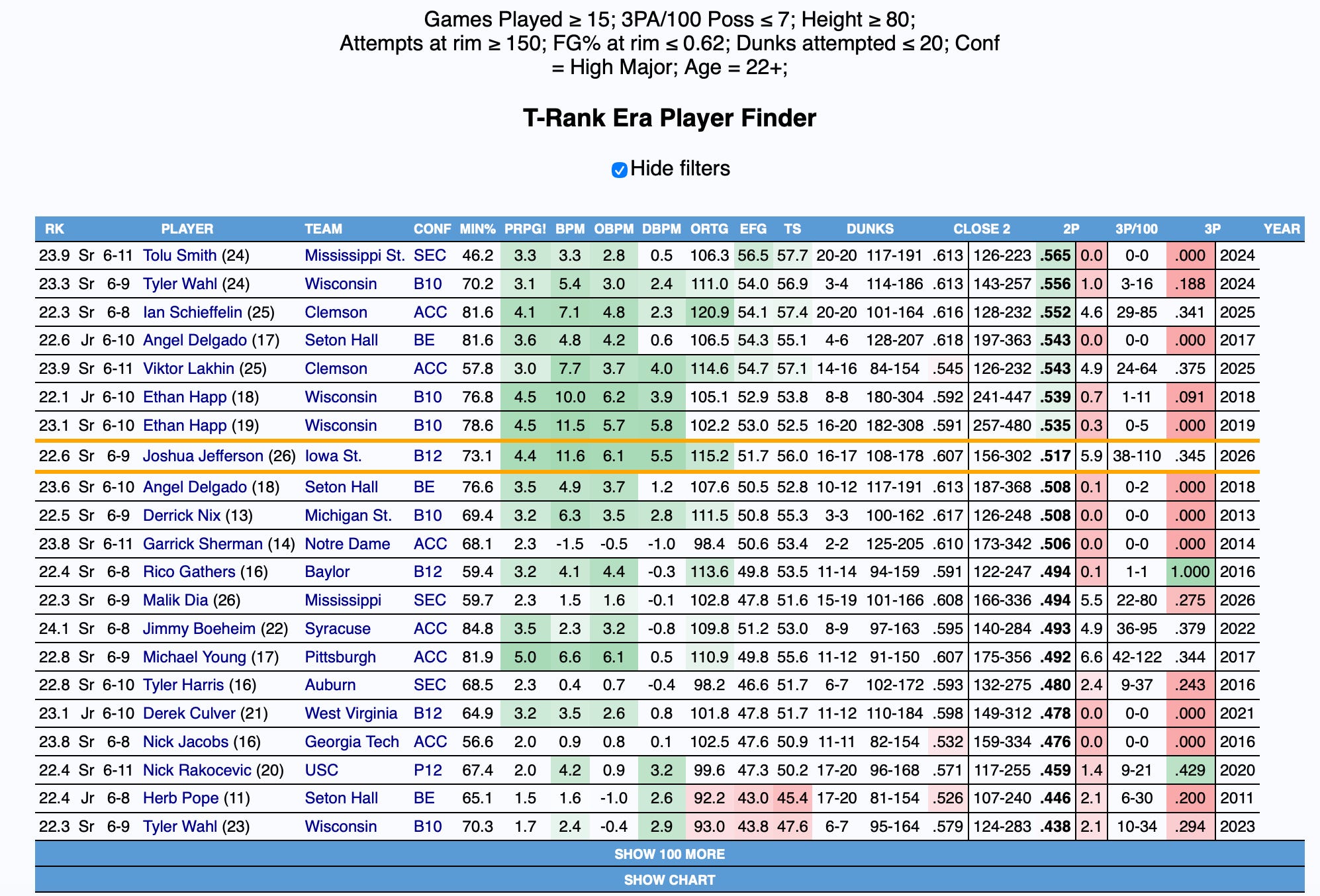
Operating inside the arc without elite athleticism or touch around the rim puts Jefferson in unsavoury queries of older guys who struggle with scoring efficiency and don’t really have steep, projectable shot development curves.
Dailyn Swain
Ranking on my big board: 13th
I had a lot love for prospect Swain in the 2025 NBA Draft cycle before he decided to pull out of the draft and transfer to Texas, so him being so awesome for the Longhorns in 2025-26 feels like a justification.
A highly important note on Swain: though his on-ball abilities were clear at Xavier, it was at Texas he was essentially fleshed into a point forward.
The playstyle at Texas and its’ NBA replicability is a critical part of Swain’s evaluation, possibly even more so than for other prospects. At Xavier, Swain was considered a borderline NBA prospect. At Texas, he played himself into the consensus 1st round, and possibly even higher, which means that this sample carries heavy weight.
If you needed a blunt answer to that question, I’d say most probably no, and the reason for that is that the 3 PT attempt suppression and turnover economy just don’t add up to a productive translation of this playstyle.
Among players with >25% usg on @draftballr’s 2026 big board at the time of making this query, Swain has by far the highest creation turnover (TOV / creation burden) rate.
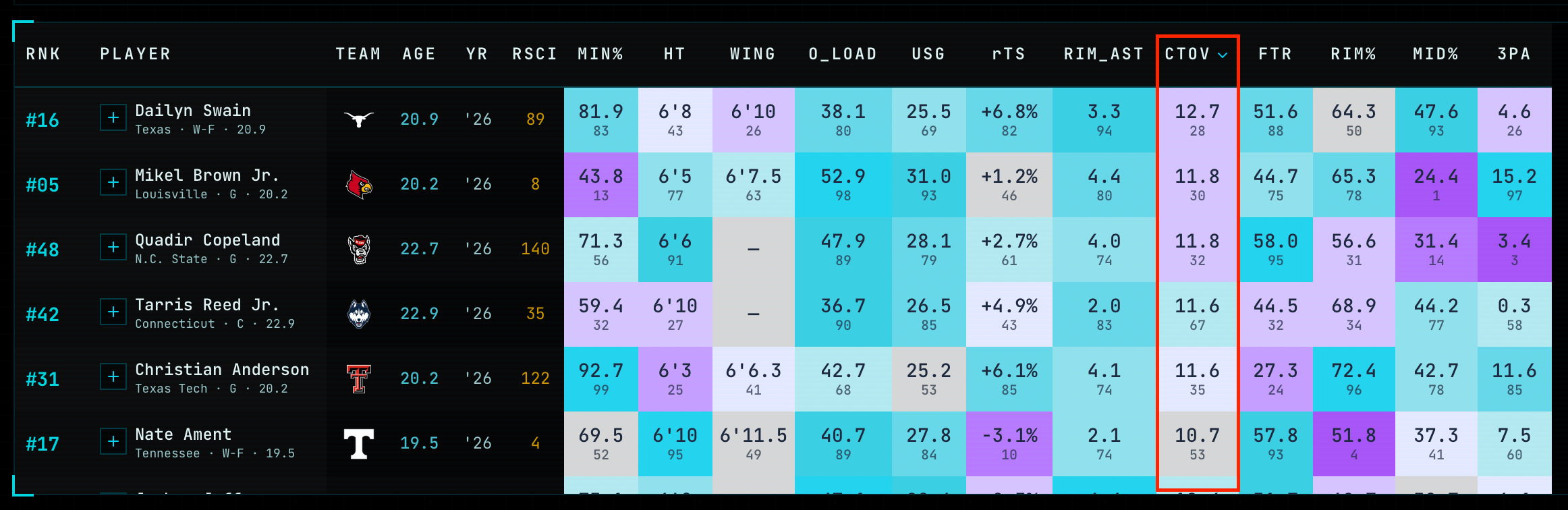
On top of that, Swain doesn’t really carry enough of a p&r passing volume to sustain and justify a really high volume of on ball reps; it obviously isn’t a single player’s fault, but the point forward-Swain driven Texas offense was just 347th in assist rate.
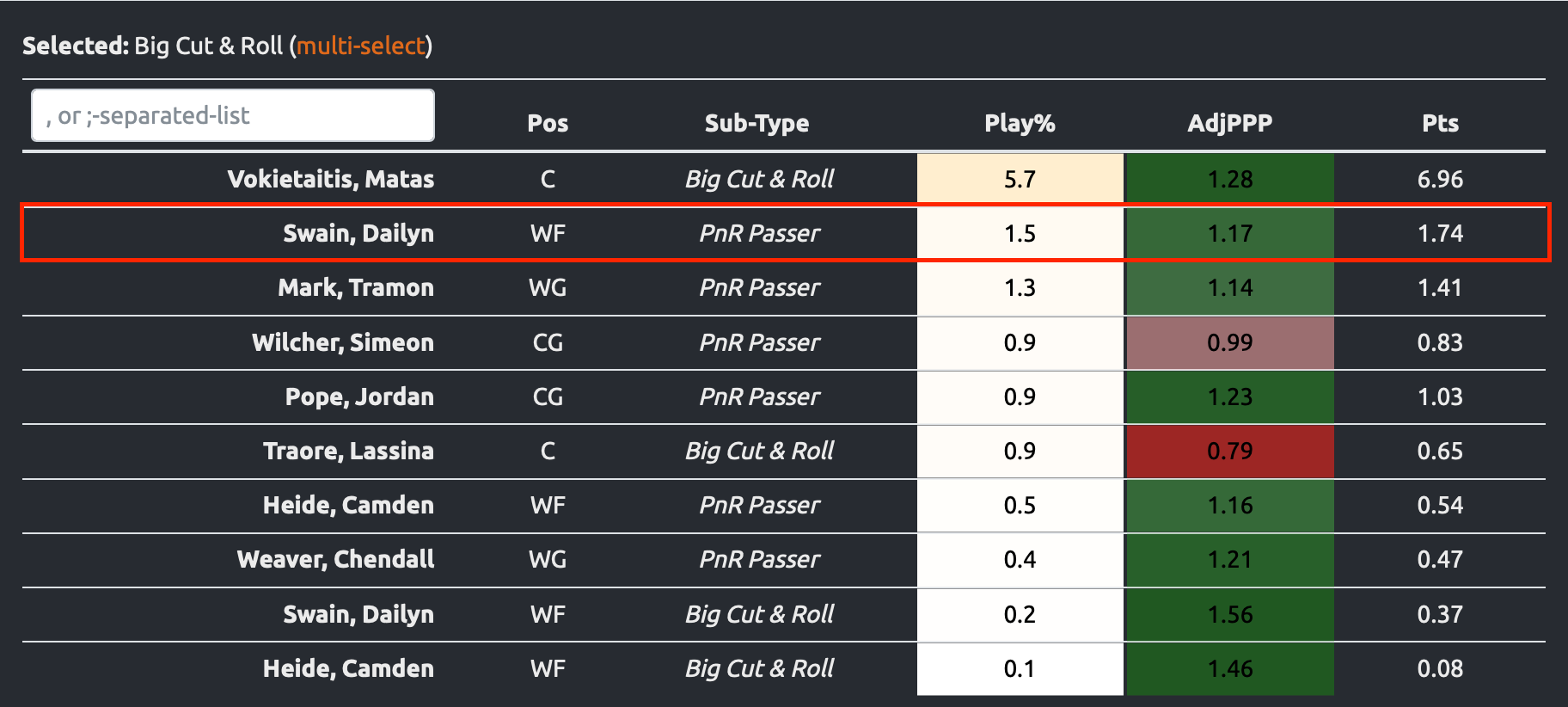
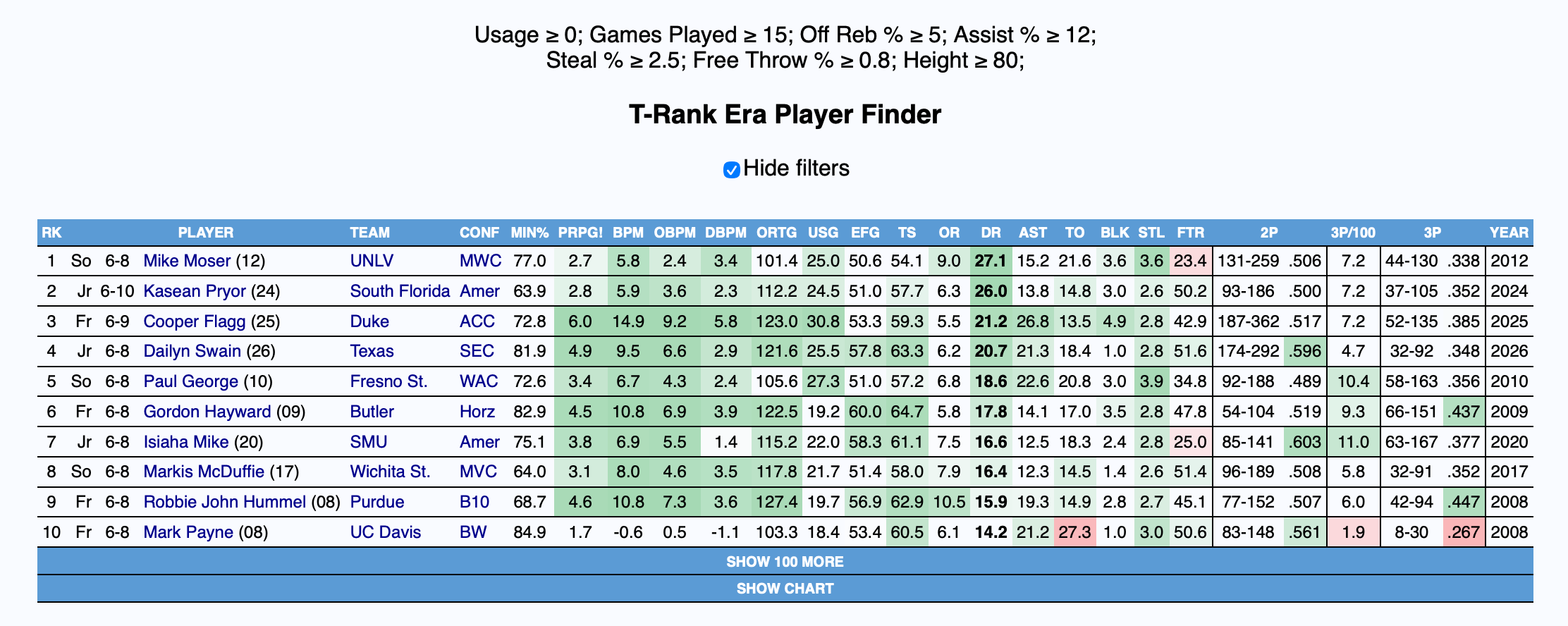
Size is king in the NBA and Swain’s high end outcomes as a potential offensive gamebreaker are tied to him being able to essentially be an oversized 2, but for that to happen I think it’s neccessary to drive up the 3 pt rates, which is going to be tricky since, despite having the touch, Swain remains a hesitant 3 pt shooter.
I believe Swain and his playstyle do start to bleed value the higher we go up the positional ladder.
Luckily for Swain, I think he has enough ancillary production to survive the NBA as an offensively overqualified combo forward, so this remains a player worthy of a late lottery grade.
Morez Johnson Jr.
Ranking on my big board: 12th
For more on Johnson Jr., I direct you to my article for The Center Hub I wrote in January.
I largely stand by it and I think Morez’s value proposition as a combo big capable of filling multiple roles deserves a lottery grade. The testing numbers at the NBA Draft Combine was great as well.


Zuby Ejiofor
Ranking on my big board: 21st
I try to refrain from the influence of absolute highest leverage of hoops on my draft evaluations, but I did think about Zuby Ejiofor when watching Karl Anthony-Towns be the most effective antidote to Victor Wembanyama in the NBA finals.

Ejiofor’s ability to take on a significantly higher volume of on-ball reps is an extremely encouraging development, vaulting him from a fringe NBA draft prospect, pigeonholed into an extremely unfavourable archetype, into an undersized combo big, posessing both the size and driving ability of a potential matchup nigthmare.
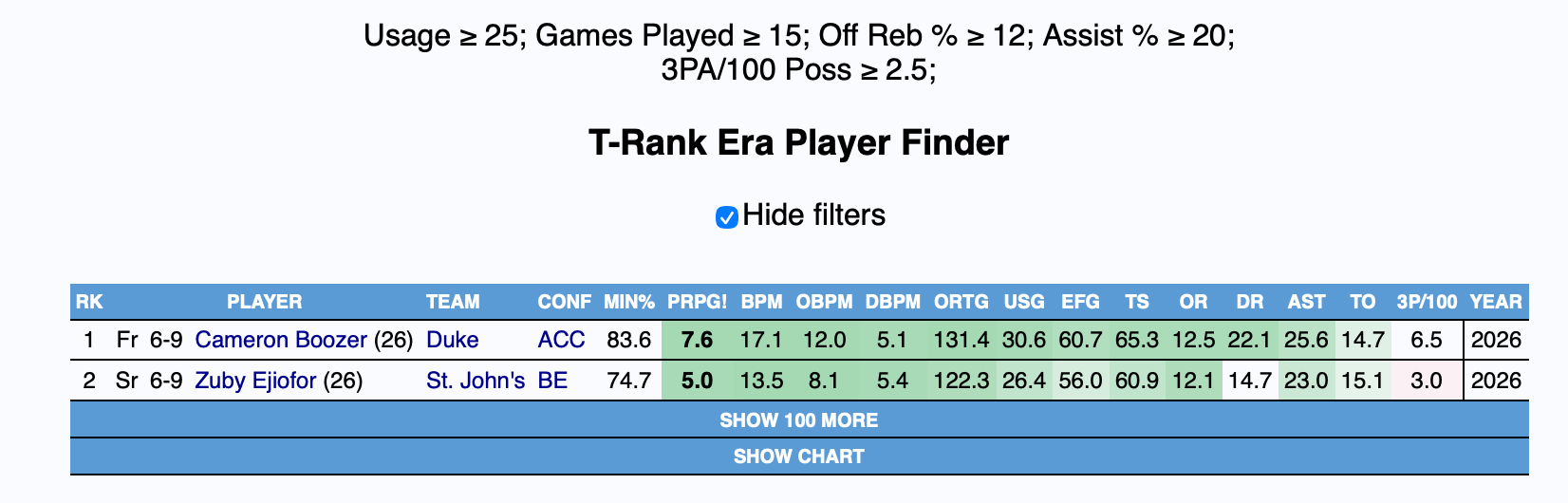
This particular development of Ejiofor was a life saver for Rick Pitino’s St. John’s team, whose 2025 summer recruits at the guard position were questionable, to say the least. Outside of transition, pretty much every efficient play type for the Red Storm was driven by Ejiofor.
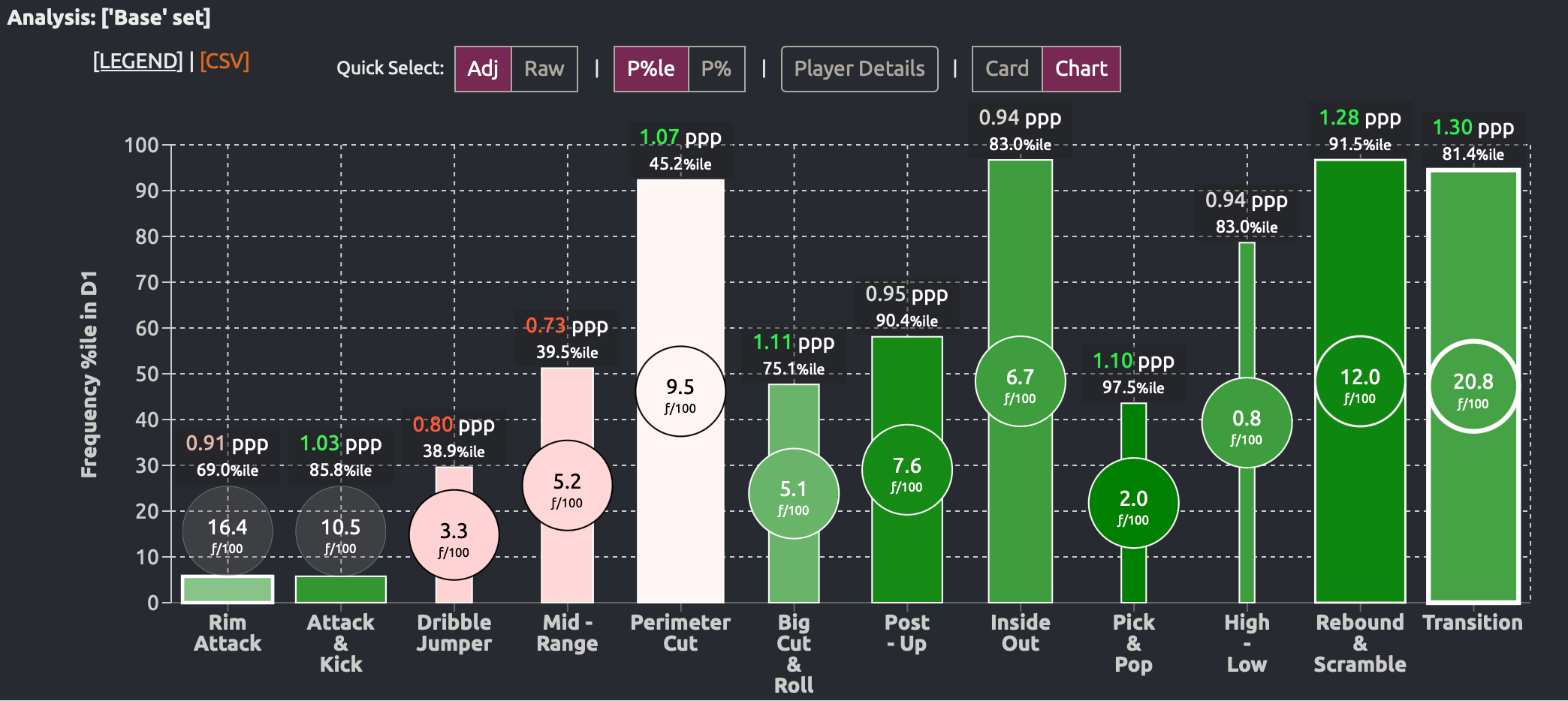
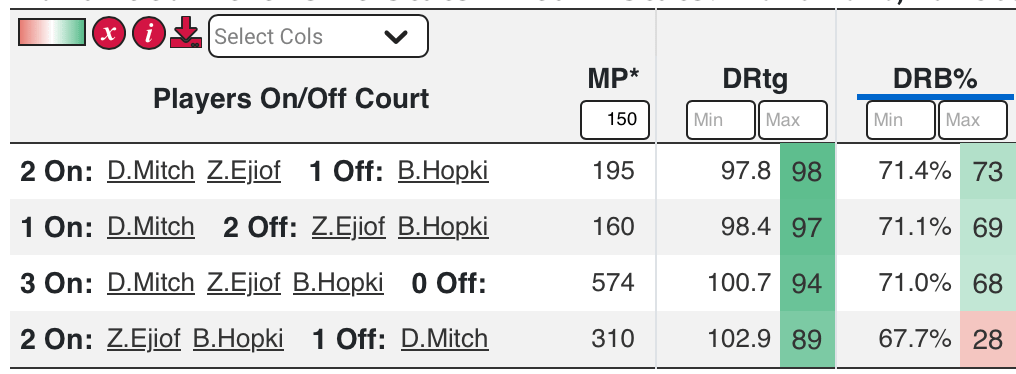
Regrettably, St. John’s refrained from playing Ejiofor alongside their other uber-productive big Ruben Prey. Per hoop-explorer’s lineup tracking, Ejiofor played all of his minutes at the center spot, with Prey backing him up, so the collegiate sample provides no proof-of-concept for Ejiofor playing as a 4.
His poor defensive rebounding for a center required quite a bit of insulation: even playing with two outstanding wing rebounders in Bryce Hopkins and Dillon Mitchell, overall rebounding numbers were very much middling.
Allen Graves
Ranking on my big board: 7th
Any attempts to do a long-form analysis on Santa Clara’s outstanding redshirt freshman Allen Graves would fall way short of replicating the standard of quality in this outstanding piece by Avi and Gav.
If I could add anything to the Graves discourse, I’d just humbly make a couple of points.
First, if you’re turned off by a -4.8 defensive rating swing with Graves on the floor, don’t be; it’s mostly a product of him being positionally displaced as a center and backing up a 7’2” big Bukky Oboye.
It’s not conceivable to expect a 6’9” player to be as good at rim deterrence and paint defense as Oboye. Just perceive Graves as a combo forward at the next level and you’ll be alright.
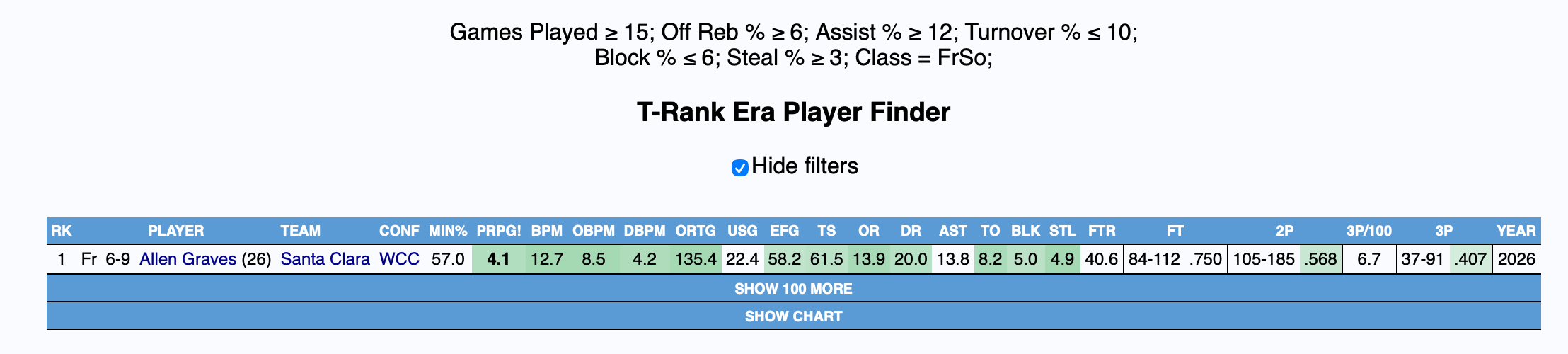
Secondly, with NBA scouting network now reaching virtually every place in the world (and most elite prospects choosing the NCAA path anyway), as well as NIL pulling non-blue chip players with remaining eligibility back to school en masse, grabbing an all-time draft day steal is more difficult than ever.
Draft steals are still very common, but at the same time I don’t believe that in 2026, NBA teams would conceivably let Nikola Jokic, a player with an outlier combo of mass, basketball cognition and touch, fall all the way to 41st. Essentially, pulling a steal of that magnitude now feels close to impossible.
The most plausible narrow pathway towards anything resembling that nowadays, I believe, rests on 3 components: young age, RSCI misevaluation and playing college ball in a low-key environment, devoid of high-profile individual accolades and deep NCAA tournament runs.
Graves hits all 3 of those criteria. Don’t be shocked when he’s great in the NBA.
Ebuka Okorie
Ranking on my big board: 10th
Speaking of young, misevalued by RSCI and playing college ball in a low-key environment, meet Stanford’s Ebuka Okorie.
Consensus has overlooked Okorie for the most of the cycle, and in a lauded draft class full of (at least what I consider to be) flawed lead handler bets, he at the very least belongs in the conversation.
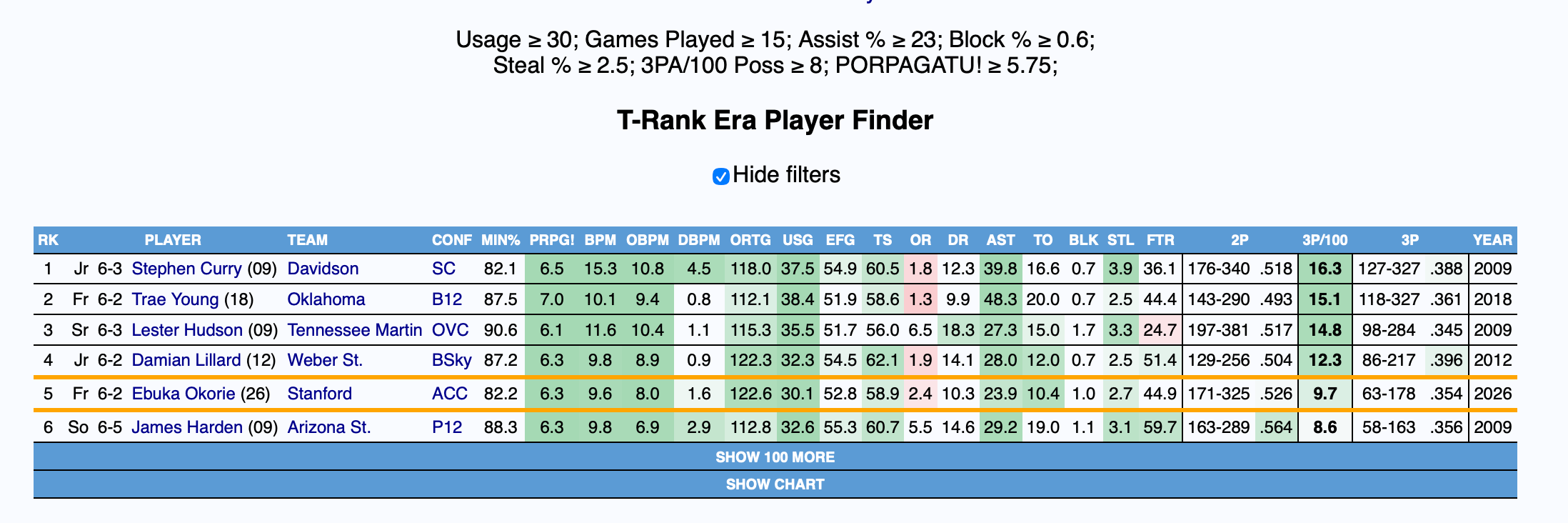
As you might have read in the first part of my notes, I discussed the heavy hit on LaBaron Philon’s ancillary production caused by a role shift, a rather precarious tendency for a rim-reliant, ball-dominant guard lacking both size and athletic ability.
Though the margins may seem small to the naked eye, Okorie and Flemings are the clear two stock champions in this group; ability to cross both the >1% BLK and >2.5% STL rates is a testament to their underlying athletic and defensive cognition traits, all of which were exhibited under a heavy offensive strain.

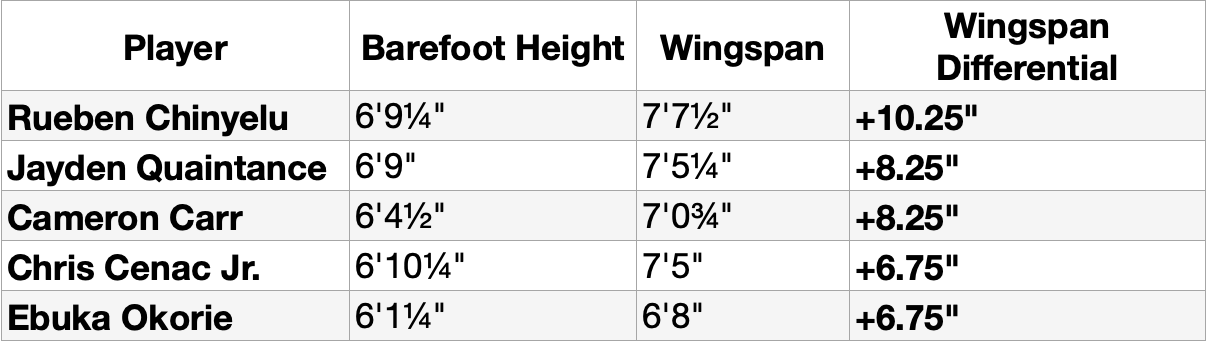
The superior anthros back up most of what you’re seeing on here. Okorie leads this group in BMI; his speed, advanced handle and lower center of gravity pertains to an absurdly low tov% rate. He has very long arms, boasting one of the largest wingspan differentials in the entire draft.
The scariest parts in Okorie’s profile are all related to passing volume.
Per hoop-explorer, his passing volume to cutters and rollers was just in the 12th and 25th percentile, respectively. Okorie misses passing windows, while his extremely low turnover percentage may be a double-edged sword, as it could signal an aversion to risk and high leverage reads.
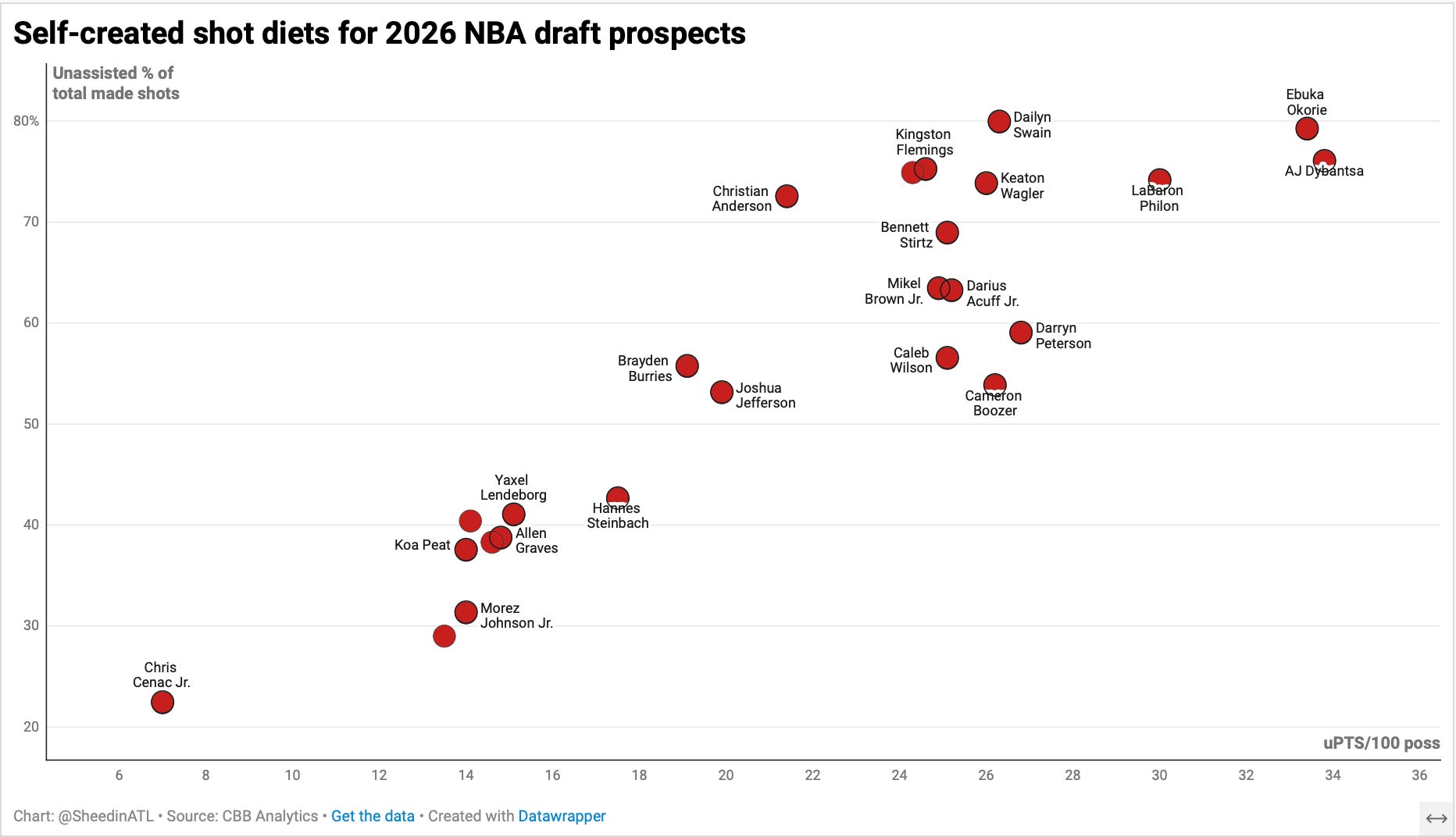
Nevertheless, even without the passing, Okorie may be an outlier because of all the offense he creates for himself; in terms of self-creation in this draft, it’s really Okorie and Dybantsa sitting in a different stratosphere compared to anyone else.
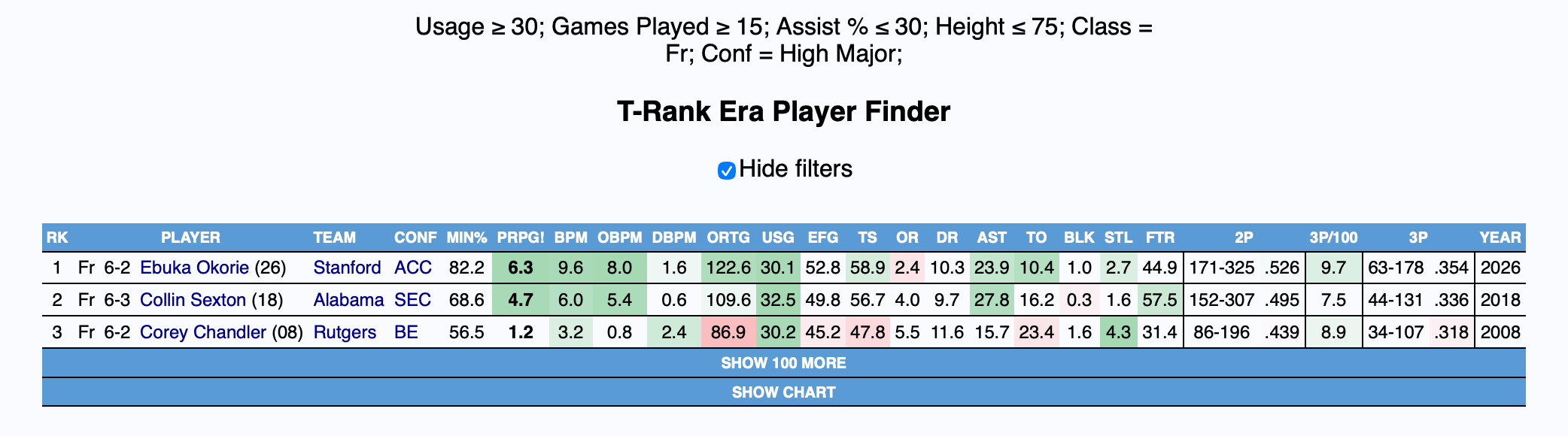
Admittedly, I did get some cold feet relative to Okorie at the very end of the cycle. I’m kind of hedging my bets here by placing him 10th because there’s a non-zero chance that’s just a Collin Sexton with better defense.
Chris Cenac Jr.
Ranking on my big board: 17th
In one of NBA Draft group chats on Twitter Cenac was called a ‘boring’ prospect, which I thought captures him pretty well.
That isn’t as much a dig on Cenac as it is a description of a player who’s ceiling is largely capped by his below-average feel for the game and low aptitude for breaking defenses down with on-ball skills.
Despite cognitive limitations, there’s clear pathways for Cenac towards becoming a solid NBA contributor. This was further enhanced after he posted outstanding anthropometric measurements during NBA Draft Combine.

These measurements are awesome for a guy who spent most of his time at Houston playing the 4, and it’s likely a role where he’s going to be best at the NBA level as well.
Cenac’s advantages as a basketball player became apparent as the season went on: his physicality (indicated by great rebounding numbers), athleticism (2:1 rim:dunk ratio) and high RSCI ranking clearly point to a productive, high floor big with intriguing skill intersections.
Cenac gets his fair share of stick for his below-average feel for the game, questionable decision making and very limited on-ball equity, and I was certainly guilty of that myself when evaluating Cenac as a high school player.
But Kelvin Sampson has showed the way for Cenac’s future employees: isolate him from decision making on the ball, allow him to crash the glass, fill the lane and trust the long ball. That’s how freshman Cenac’s turnover rate, with all of his supposed bad habits and poor feel, was brought down to just 11.4%.
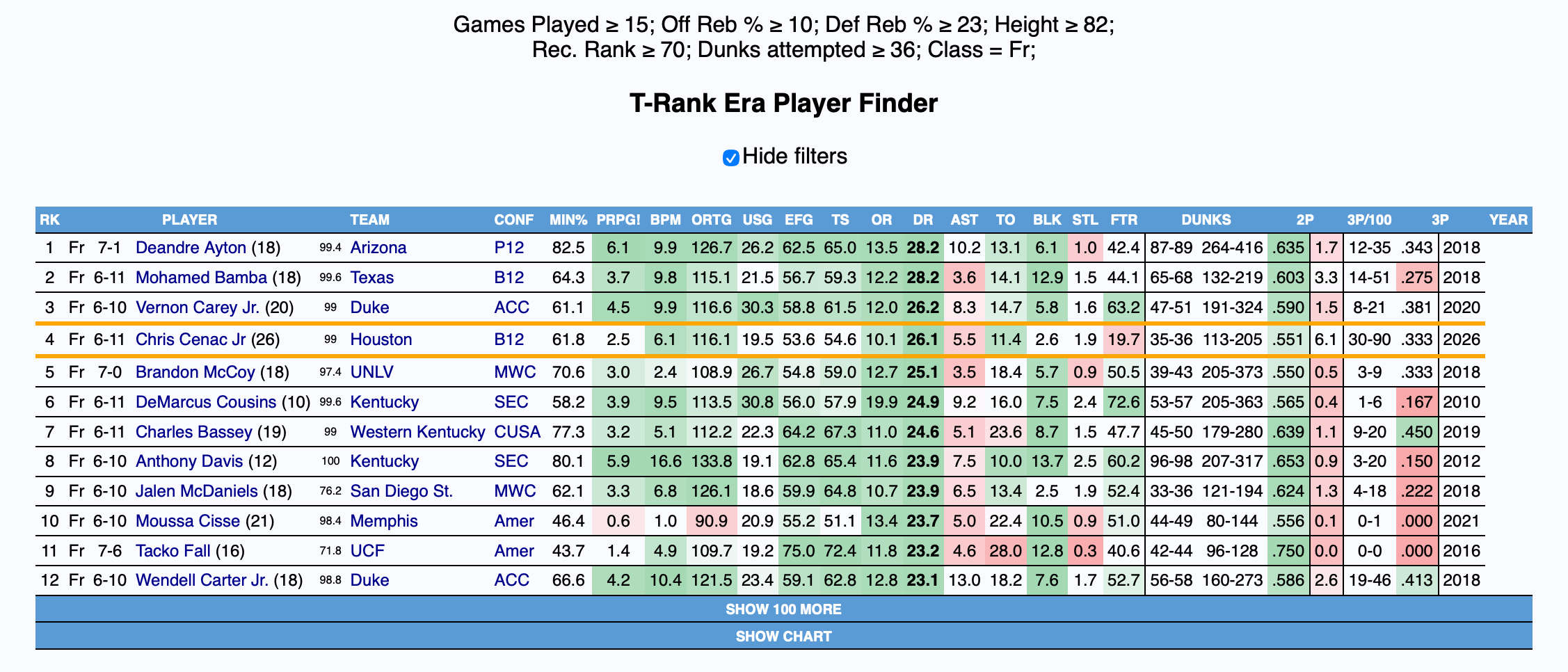
As a 4, Cenac adds value by helping you win the possession battle by pressing down turnovers and creating second chances, akin to a bigger, more athletic Dean Wade.
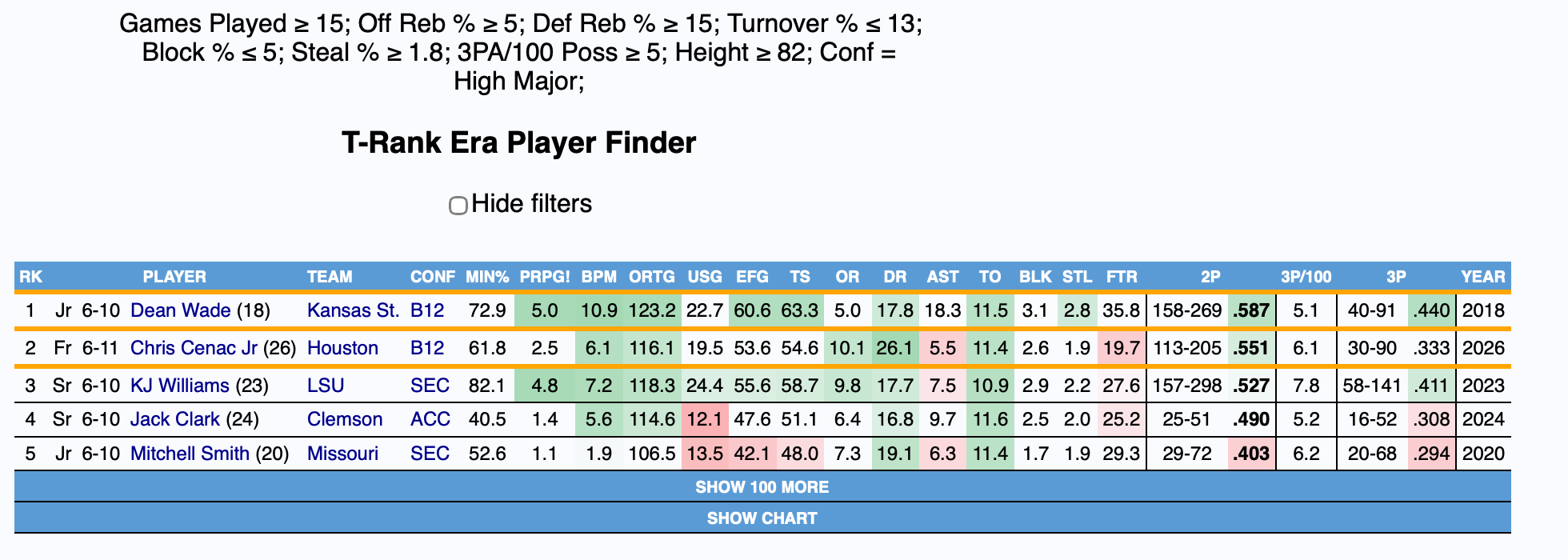
Outstanding defensive rebounding also means Cenac can enable two-big lineups where the other big is on the leaner, more mobile side, i.e. Evan Mobley, who’s been a great defender throughout his career, but bleeds some of his defensive value because he struggles boxing out and grabbing defensive rebounds.
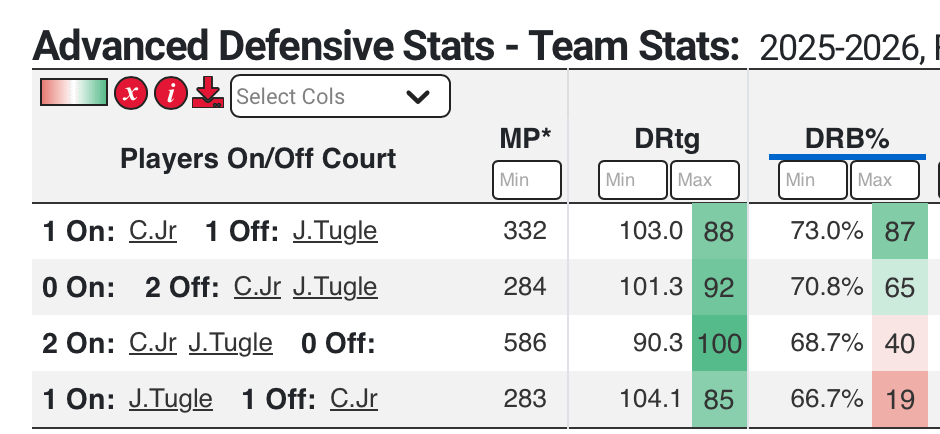
His pairing with JoJo Tugler (11.1% DREB rate) at Houston serves as a solid proof-of-concept for the hypothesis.
This particular pairing ended up highly synergetic because they covered for each other’s shortcomings so well: Tugler was a stock machine who couldn’t grab a defensive rebound, while Cenac was a below-average shot blocker and turnover creator who, conversely, was a monster on the glass.
Sometimes the best solutions are the ones that are the most apparent.
Brayden Burries
Ranking on my big board: 20th
Before proceeding towards any Burries evaluation, we need to lay down at least the basics of team context at Arizona.
Despite their guard Jaden Bradley getting the Big 12 player of the year honours, stylistically the Wildcats were driven by their frontcourt, Motiejus Krivas, Koa Peat and Tobe Awaka, who were the most consequential players to both their playstyle and team success, relegating both Bradley and Burries to somewhat ancillary roles.
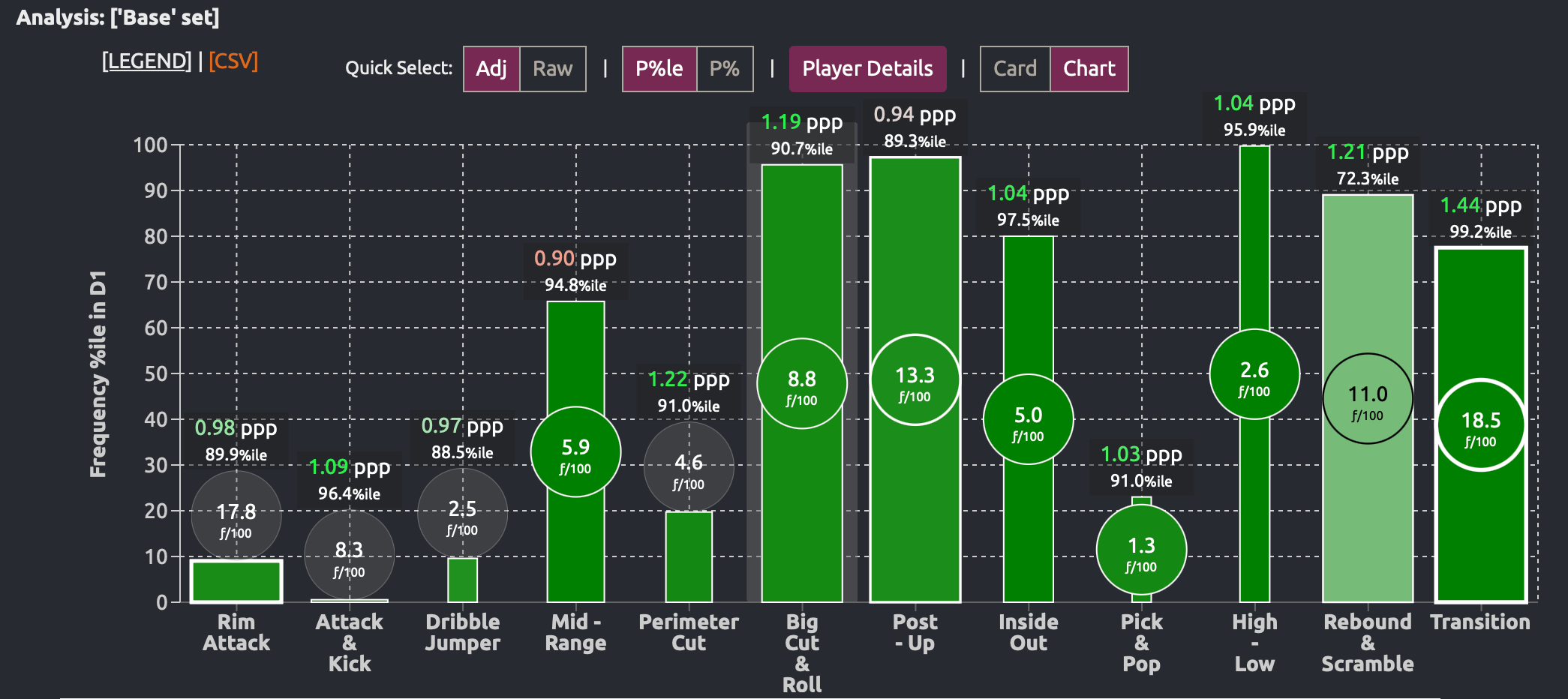
This meant that Burries’ profile at Arizona was adjacent to a wing/secondary guard hybrid, he created just around 55% of his own shots, when lead guards usually cross the 70% unassisted threshold.
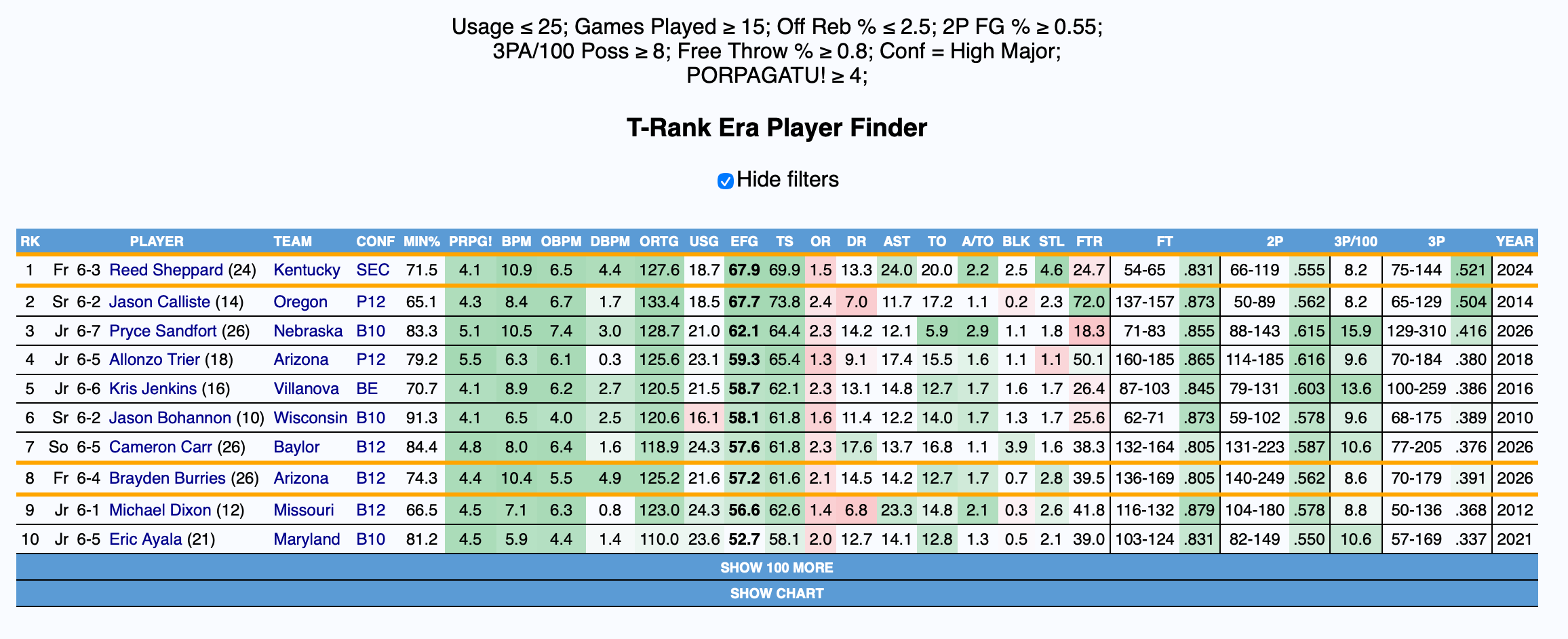
Arizona essentially pigeonholed him in an undersized wing/guard hybrid rola, in that sense comparing him against such recent NBA players like Jared McCain, Monte Morris, Reed Sheppard, Jase Richardson, Miles McBride etc.
For me personally the defining characteristic of Burries is that he… kinda doesn’t really have any truly defining, standout characteristics? It isn’t ideal considering his deceptive freshman status as a player who’ll turn 21 in September. He’s not really a posession maxer, while his turnover rate is decent, it’s not anything out of the ordinary considering his reduced offensive role.
This really puts a lot of pressure on him making it as a shooter, which, by all accounts, is his primary strength on offense, making him into a bit of a ‘did the ball go in’ type prospect.
The indicators are somewhat strong and with Arizona’s 3 point attempt suppression i believe Burries has the capability to scale up the 3pt volume, but that doesn’t necessarily predict NBA success by itself, especially when you don’t really grab offensive boards.
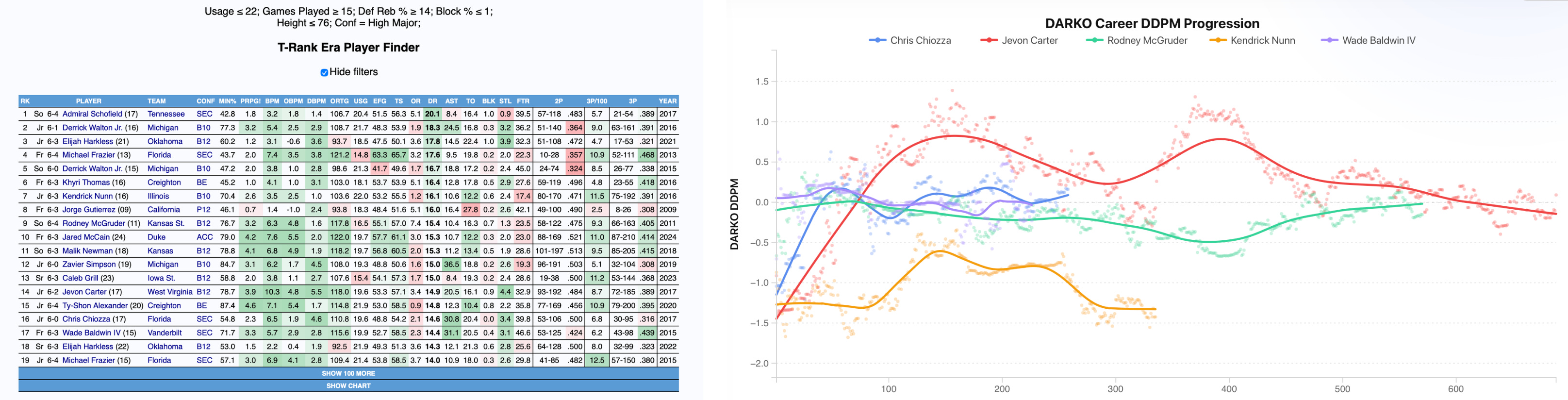
Burries is good at turning opponents over. Also, being one of the heavier guards in this years draft class (26.4 BMI) are decent indicators for defensive success, but Burries doesn’t really have the premium wingspan or athleticism, mostly binding him to the ground as a defender.
Burries’ athletic testing was really good with a 38.5 inch max vertical, but empty gym testing is a slippery slope and can potentially lead to false positives.
At the end of the day I don’t really mind Burries as a prospect and I’m not mad at any placements starting with late lottery; I just personally prefer the prospects I ended up putting above him.